

Curious about what we’ve done? We’d love to show you! We’re proud of our varied collaborations with UM researchers, local community partners, and international organizations.
The Plant pursues research across three interconnected themes while partnering with researchers to develop innovative methodologies and explore new applications of creative technology. Our projects range from large-scale infrastructure development to experimental collaborations that push disciplinary boundaries.
Check out our archive of research grants, collaborations, and other projects below.
Status: Active (2025-2028)
Role: Work Package Leader (WP3: Designing and testing GenAI solutions for tutoring)
Coordinator: Università degli Studi di Roma Tor Vergata
Partners: European consortium of 8 institutions
Funding: European Commission, Erasmus+ Cooperation partnerships in higher education
Budget: €400,000 (consortium total)
Period: December 2025 – November 2028
Research Question:
How can Generative AI be integrated into higher education in ways that are ethically responsible, pedagogically sound, and easily scalable—enhancing both teaching effectiveness and student engagement?
Our Approach:
Together with DexLab, The Plant leads Work Package 3, focused on designing and testing GenAI solutions for tutoring. We’re developing practical use cases, training frameworks for faculty, and ethical guidelines that address the pressing need for structured approaches to AI adoption in universities.
Innovation:
Moving beyond hype to create evidence-based frameworks for GenAI in education. Our work examines not just if AI should be used in teaching, but how to do so without compromising pedagogical quality, student agency, or academic integrity.
Expected Outcomes:
Project Website: https://atlas-project.eu/
Tags: #GenerativeAI #HigherEducation #Pedagogy #Ethics #ErasmusPlus
Status: Active (2025-2030)
Role: ICT Software Consultancy & Research Software Engineering
PI: Brigitte Le Normand
Funding: European Research Council (ERC) Consolidator Grant
Period: September 2025 – August 2030
Research Question:
How did women migrants from southern Europe and Turkey contribute to post-war economies in France and West Germany between 1955-1985, and how can we reconstruct their overlooked histories?
Challenge:
Post-war European migration is often portrayed as predominantly male, but women comprised 25-30% of migrants. Their contributions in factory and domestic work have been systematically overlooked and under-documented.
Our Approach:
The Plant provides research software engineering support to create a comprehensive counter-archive. We’re developing:
Innovation:
Building digital infrastructure that treats oral histories and creative writing as legitimate research data alongside traditional archival materials—creating new pathways for preserving and analyzing marginalized voices.
Collaboration Model:
Long-term embedded research software engineering—we’re not just building tools but co-designing the research methodology itself.
Tags: #MigrationHistory #DigitalArchive #OralHistory #DataVisualization #CounterArchive #ERC
Status: Active (2026-2031)
Role: Digital countermapping and storytelling research applications
Work Package Leader: Christian Ernsten
Funding: NWA-ORC (Research along Routes by Consortia), Dutch Research Agenda
Total Budget: €6.8 million (consortium)
Period: January 2026 – December 2031
Research Question:
How can we develop inclusive approaches to traumascapes—sites bearing physical and emotional traces of colonial violence and trauma—that foster dialogue rather than polarization?
Challenge:
Across the Netherlands and former colonies, traumascapes generate polarized societal debate. Traditional heritage approaches often reinforce dominant narratives while marginalizing affected communities.
Our Approach:
Collaborating with Christian Ernsten, The Plant is developing digital countermapping and storytelling tools for South African colonial collections. We’re creating methodologies that:
Innovation:
Countermapping as research methodology—using digital tools not to create authoritative maps but to reveal whose voices are present, whose are absent, and how spatial narratives can be contested and reconstructed.
Methodologies:
Partners:
South African academic and societal partners, Dutch heritage institutions
Tags: #ColonialHeritage #Countermapping #DigitalStorytelling #ParticipatorResearch #CriticalGIS
Status: Active (2025-2026)
Role: Documentation & audioscape development
Collaborators: Graham Fitkin (composer), Claartje Rasterhoff (UM/MAACH), Maurice Hermans (Intro in Situ), The Plant
Partners: MACCH, Intro in Situ, Extended Youth program (Marres/Jan van Eyck Academy)
Funding: Maastrichtjaar, MACCH
Period: 2025-2026
Concert: July 8, 2026
Research Question:
How can sensory research methods—sound recording, spatial audio, embodied mapping—connect communities to their local natural and cultural heritage?
Project Description:
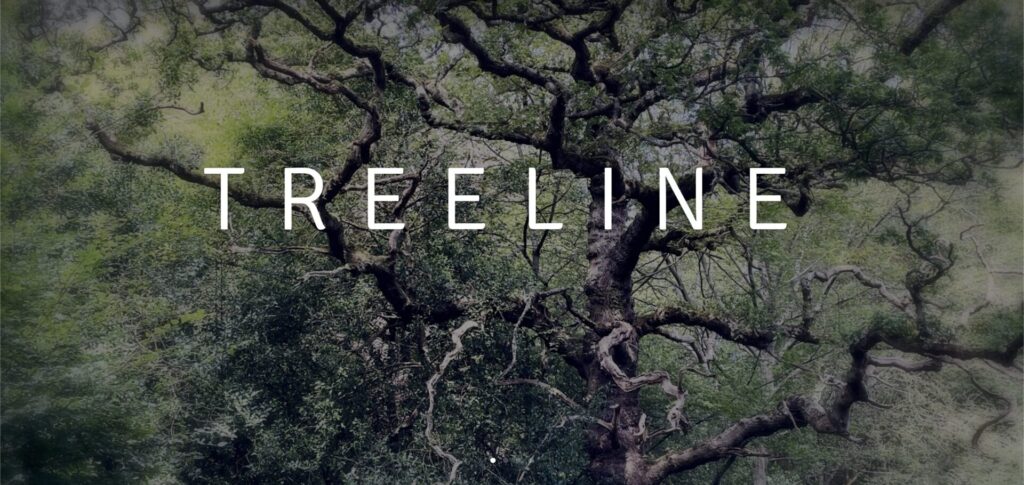
TREELINE celebrates Europe’s ancient forests by bringing communities together around local trees of significance. For Treeline Maastricht, we’re creating a ‘profile’ of a chosen Maastricht tree through:
Composer Graham Fitkin transforms this material into an hour-long musical composition, which will be performed in Maastricht as part of his journey across Europe performing in the cities of each participating tree.
The Plant’s Role:
Innovation:
Treating ecological sites as archives—using sound, sensory data, and creative practice to unlock environmental histories and foster human-nature connection.
Project Website: https://treeline.org.uk/
Tags: #SoundArt #Ecology #Heritage #CommunityEngagement #SensoryResearch #SpatialAudio
PROJECT ARCHIVE

Working together with Dr. Ruud Hendriks, The Plant’s Creative Lab Technologist designed a series of experimental workshops focused on understanding the black box of data surveillance through art creation. By capturing data via Arduino sensors and using Processing to turn that data into a creative expression, we learned what it takes to make data surveillance principles understandable via hands-on making.
Working alongside researcher Dr. Brigitte Le Normand, The Plant led design thinking sessions to develop a prototype of an accessible, flexible, and sustainable spatial heritage app based on Brigitte’s previous project, ‘Rijeka in Flux’.
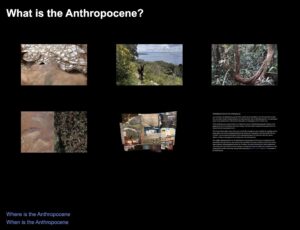
As part of the Rethinking Values in the Anthropocene Project, The Plant’s Creative Lab Technologist led Dr. Simone Schleper and her collaborators in learning how to use Twine and other digital storytelling tools to create an interactive learning platform.