Innovating Creative Technology Through Research & Partnership
The Plant is a creative technology research lab advancing humanities and social science research through experimental methods and collaborative innovation.
What's possible when
Our research explores these questions—and we partner with researchers, educators, and institutions across disciplines to discover the answers together.
Research through collaboration
The Plant operates as both laboratory and partnership hub. We pursue our own research agendas in creative technology while collaborating with researchers who bring domain expertise we don’t have.
This model of merging technical innovation with disciplinary depth produces research that neither party could achieve alone.
Our projects have resulted in peer-reviewed publications, new methodologies, grant-funded initiatives, and tools now used by researchers globally.
Exploratory Research Consultation
Come with a research question and we'll think together about methodological possibilities—could LLMs help analyze your historical texts? Could VR create embodied experiences of your data? Could computational imaging reveal new patterns in your material?
We help you evaluate technical feasibility, identify methodological approaches, and design research that's both ambitious and achievable.
Typical timeline: 2-4 sessions.
Example outputs: Research design document, pilot study plan, grant proposal section
Co-Research Partnerships
Let's collaborate as equal research partners—merging your domain expertise with our methodological and technical knowledge. We'll design the research together, troubleshoot together, analyze findings together, and co-author publications together.
This model works best for projects where technical innovation is central to the research question, where we're genuinely exploring unknown territory, or where the methodology itself becomes a research contribution.
Typical timeline: 6-18 months.
Example outputs: Co-authored papers, new tools/methodologies, conference presentations, research datasets
Knowledge Transfer
You have a specific technical goal—training a custom LLM, creating a data visualization, building an XR experience, processing a dataset—and want to learn how to do it yourself. We'll work alongside you on your specific project, teaching you the methods so you can apply them independently afterward.
This works best when the technology is relatively established and when you'll use these skills in multiple future projects.
Typical timeline: 4-12 weeks.
Example outputs: Completed project, documented methodology, reproducible workflow, your new skillset
Our research agendas
The Plant pursues research across three interconnected themes. Each represents both an active research program and a domain where we collaborate with partners.
Digital Storytelling
Stories take new forms in digital space—interactive, spatial, data-driven, procedural, or immersive. We research how emerging technologies enable new narrative structures and how digital storytelling can make complex research accessible and emotionally resonant.
Current projects: VR experiences of archaeological sites, data-driven interactive documentaries, podcast series methodology for qualitative research dissemination, spatial audio narratives and augmented reality experiences
AI & Cultural Production
How do large language models change how we analyze, create, and understand narrative and culture? Our research examines LLMs as both research tools and cultural objects—developing methods for using AI in humanities research while critically examining what these technologies mean for creative practice.
Current projects: LLM-assisted analysis of historical correspondence networks, creative writing collaboration with language models, bias detection in cultural heritage datasets
Critical Making & Material Computation
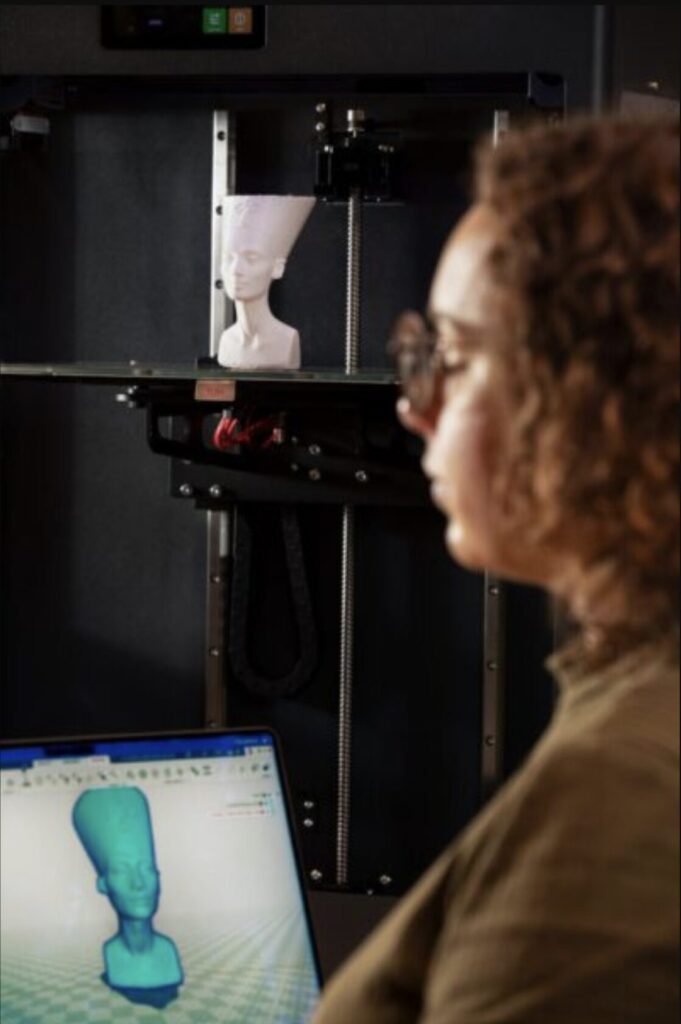
Making things with technology reveals how technology works—and how it shapes us. Through 3D printing, physical computing, creative coding, and hands-on experimentation, we explore technology not just as a tool but as a material that carries cultural meaning and political consequence.
Current projects: 3D digitization methodology for cultural heritage (PURE3D infrastructure), creative coding for data physicalization, critical mapping of urban digital infrastructure, computational imaging for archaeological analysis
Who's who?
Our interdisciplinary team brings together archaeologists, cultural heritage practitioners, linguists, designers, software engineers, and creative technologists. This range means we can approach research questions from multiple angles—and ensures our collaborations genuinely bridge disciplinary boundaries.
Each team member pursues their own research agenda while contributing to collaborative projects. Below you’ll find their specializations, current research, and how to connect with them about potential collaborations.
Did you know?
Costas is an amazing cook & baker – he’s featured in the FASoS cookbook!
Costas Papadopoulos
COORDINATOR | ASSOC. PROF | ARCHAEOLOGY & CULTURAL HERITAGE
Costas's research spans 3D reconstruction methodologies, virtual archaeology, and computational imaging for material culture analysis.
He's the Principal Investigator of PURE3D, the Netherlands' national infrastructure for publishing and preserving 3D scholarship—a project addressing fundamental questions about how we document, share, and preserve three-dimensional research data.
Did you know?
Claartje coaches a football team for women & girls in Belgium!
Claartje Rasterhoff
COORDINATOR | ASSIST. PROF | CULTURAL HERITAGE
Claartje's research focuses on collective action and regenerative practices in art, culture, and heritage—examining how communities create, preserve, and transform cultural meaning across historical and contemporary contexts.
As Director of the Maastricht Centre for Arts & Culture, Conservation, and Heritage (MACCH), she leads interdisciplinary research connecting historical analysis with contemporary cultural challenges, particularly around sustainability, community engagement, and creative labor.
Did you know?
Arnoud organizes the annual Latin translation competition in Flanders.
Arnoud Wils
RESEARCH SOFTWARE ENGINEER | COMPUTATIONAL LINGUISTICS & AI
A genuine AI expert,
Arnoud merges linguistics with artificial intelligence, specializing in harnessing large language models to explore and analyze unstructured data in structured ways.
As The Plant's Research Software Engineer, he develops the custom tools, workflows, and computational infrastructure that power our research collaborations.
His expertise spans data cleaning and preprocessing, LLM fine-tuning and prompt engineering, dataset visualization, and building research software that makes advanced AI methods accessible to humanities scholars.
Did you know?
Jay loves basketball & runs a local queer sports group in Maastricht.
Jaime (Jay) Simons
CREATIVE TECHNOLOGIST | DESIGN & EXTENDED REALITY
Jay thrives at the intersection of design, creative technology, and critical making. With expertise spanning sound art, creative coding, XR development, and speculative design, Jay approaches technology as a creative and critical medium—building things to understand how they work and what they mean.
As The Plant's Creative Lab Technologist, Jay develops immersive experiences, interactive installations, and experimental interfaces while maintaining the philosophy that any technology can be learned through hands-on experimentation and iteration.
Highlighted Projects
Research Grants Program
We offer yearly grants to FASoS researchers for experimental projects that push methodological boundaries. These often become full research collaborations—several have resulted in publications, new courses, and follow-on funding.
Our research agenda is supported by competitive European and national funding, including ERC Consolidator Grants, Erasmus+ partnerships, and Dutch Research Agenda (NWA) consortia. We currently lead or partner on €7+ million in active research projects spanning AI in education, digital heritage infrastructure, migration history archives, and critical cartography.
These collaborations—from building the Netherlands’ first national 3D scholarship repository to developing ethical frameworks for generative AI in higher education—demonstrate what emerges when technical innovation serves rigorous humanities and social science inquiry.
Thinking about space is how The Plant got its start – we noticed that colleagues need more room to be able to experiment, play, and take risks with exploring new research opportunities.
Our physical and computational infrastructure supports both our research and collaborative projects. Resources are available to research partners and FASoS community members.
RESEARCH SPACES
The Greenhouse – Spacious recording studio for podcast production, oral history collection, and audio research (2-5 people)
The Stem – High-performance computing workstations for 3D modeling, video editing, data analysis, and LLM experimentation (1-2 people)
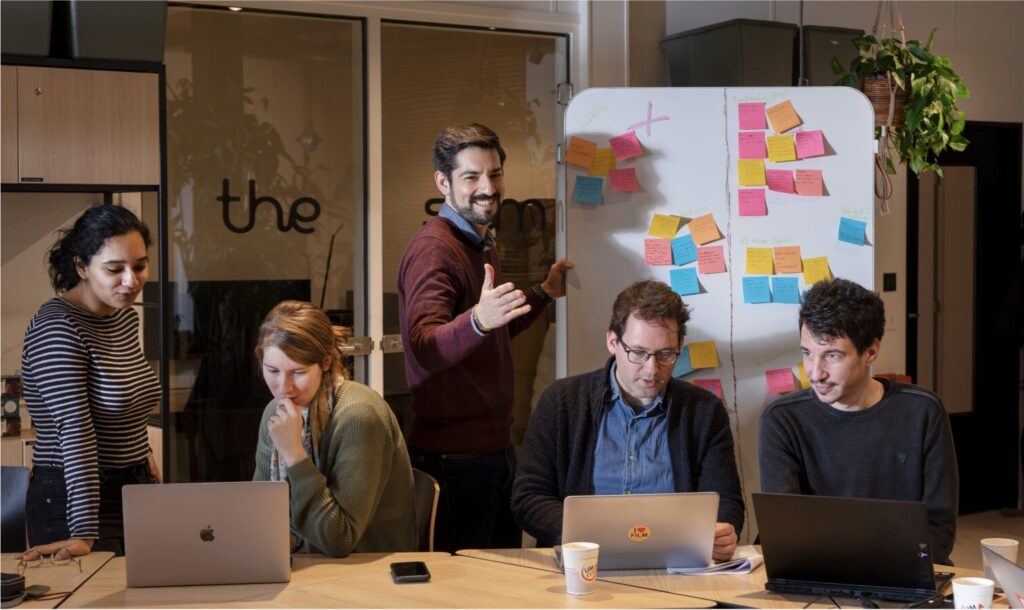
The Field – Workshop and collaboration space for prototype building, creative coding sessions, and research design workshops (2-20 people)
Professional recording equipment, VR headsets, 3D printers and scanners, DSLR cameras with photogrammetry setups, specialized software for 3D modeling, video production, data analysis, and creative coding.
Access to high-performance computing for data-intensive projects, GPU access for machine learning experiments, licensed software for specialized analysis, secure data storage for sensitive research materials.
For major computational needs, we can help you access UM’s research computing facilities.